The Vagus Nerve
Shall we go to Vegas?
Actually, this is a different Vegas, not the party town, spelt Vegas, this is vagus, and it’s a nerve in your body.
The vagus nerve, is also called X Cranial nerve, or 10th Cranial nerve, because it begins in your cranium (skull), is the longest, most complex of the cranial nerves.
It runs from the brain through out to all of the organs in the body, passes through the face and thorax (chest) to the abdomen, neck, larynx (voice box), digestive tract, ear, heart, gallbladder, pancreas and small intestine, just to name a few.
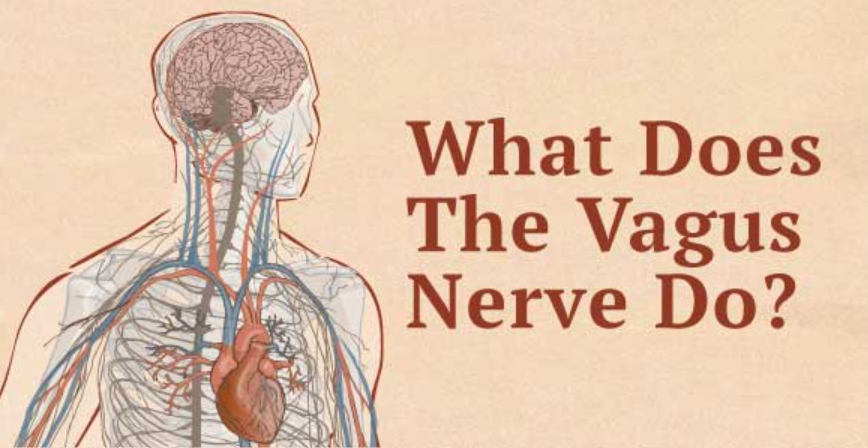
The original Latin meaning of the word vagus is “wandering,” which is an appropriate name!
The brain is able to communicate with the other organs through the vagus nerve and is often referred to as the commander-in-chief of the parasympathetic nervous system, which focuses on rest and digestion.
(I speak about the parasympathetic nervous system more below, and in a previous monthly focus > “Why we should relax” )
The Vagus Nerve and Your Health
The vagus nerve has a number of different functions. The four key functions are:
- Sensory: From the throat, heart, lungs, and abdomen.
- Special sensory: Provides taste sensation behind the tongue.
- Motor: Provides movement functions for the muscles in the neck responsible for swallowing and speech.
- Parasympathetic: Responsible for the digestive tract, respiration, and heart rate functioning.
The functions can be broken down even further and one is to balance the nervous system.
The nervous system is be divided into two areas: sympathetic and parasympathetic.
– The sympathetic side increases alertness, energy, blood pressure heart rate, and breathing rate.
– The parasympathetic side, which the vagus nerve is heavily involved in, decreases alertness, blood pressure, and heart rate, and helps with calmness, relaxation, and digestion. As a result, the vagus nerve also helps with defecation, urination, and sexual arousal.
Other vagus nerve effects include:
- Communication between the brain and the gut: The vagus nerve delivers information from the gut to the brain.
- Relaxation with deep breathing: The vagus nerve communicates with the diaphragm, and when we focus on deep breaths, this activates the diaphragm, and helps us to to relax.
- Decreasing inflammation: The vagus nerve sends an anti-inflammatory signal to parts of the body.
- Lowering the heart rate and blood pressure: If the vagus nerve is overactive, it can prevent the heart being unable to pump enough blood around the body. In some cases, excessive vagus nerve activity can cause loss of consciousness and organ damage.
- Fear management: The vagus nerve sends information from the gut to the brain, which is linked to dealing with stress, anxiety, and fear – hence the saying, “gut feeling.” These signals help us to recover from stressful and scary situations.
One of the main ways that you can stimulate the healthy function of the vagus nerve is through deep, slow belly breathing.
As we do in our Pilates & Yoga classes, we learn to use breathing exercises to shift the focus away from stress or pain.
The human mind processes one thing at a time., so if you focus on the rhythm of your breathing, you’re not focused on the stressor.
The moment we anticipate stress in any form, most of us tend to stop breathing and hold our breath. Breath holding activates the fight/flight/ freeze response; which tends to increase the sensation of pain, stiffness, anxiety, and or fear.
To practice deep breathing you can inhale through your nose and out your mouth or nose, and remember to:
- Breathe more slowly.
- Breathe more deeply, from the belly. Think about expanding your abdomen and widening your rib cage as you inhale.
- Exhale longer than you inhale. It’s the exhale that triggers the relaxation response.
There are so many other techniques for stimulating the vagus nerve, I can’t include them all today as this post would be very long, but some are;
- Loud gargling with water or loud singing, humming & chanting, activates our vocal cords which in turn stimulates the vagus nerve.
- Foot massage, gentle or firm touch can assist in stimulation the vagus nerve.
- Cold water face immersion: immerse your forehead eyes and at least 2/3 of both cheeks into cold water. This elicits the vagus nerve, decreasing heart rate, stimulating the intestines and turns on the immune system.
- Acupuncture – the meridians can be activated to call upon the functions of the vagus nerve, and promote well-being.
- Intermittent fasting improves heart rate variability, which is a marker of the state of your vagal tone.
- Eating fiber stimulates vagus impulses to the brain slowing the gut movements and making us feel fuller after meals.
- Laughter, having a good laugh lifts your mood, boosts your immune system and stimulates the vagus nerve.
- Putting legs up the wall – our yoga move we do often in class, helps to relax the body by stimulating the vagus nerve.
When we can stimulate our vagus nerve we send a message to our bodies that it’s time to relax and de-stress, which leads to long-term improvements in mood, pain management, wellbeing and resilience.
This information is timely with our new 16 Days of Mindfulness, Breath & Yoga coming up this month, as we’ll be focusing on stimulating the Vagus nerve a lot in this program.
Let me know if this information is helpful and if this is new for you, always love to hear your thoughts.
Lots of love
Em xx
‘Rest & laughter are the most spiritual & subversive acts of all. Laugh, rest, slow down’ – Anne Lamott

Related

Allow yourself to be
Allow yourself to be How often do you allow yourself to just be? I know for me this is a challenge. I grew up being busy. Our family were heavily into activities and sports and we also started to work at a young age. My parents trained us young how to work and save...
Complaint Free Challenge
Complaint Free Challenge How often do you complain? I thought this is a great topic for our monthly focus, as often many of us are not even aware we are complaining, judging or passing negative comments. See if you can catch yourself complaining, either in speech or...

Letting Go
Letting go Letting go is one of the most powerful things you can do to be happy in life. Letting go means accepting what is. It means letting go of preconceived ideas of how you think things should be, or could be, or would be if.... It means letting go of outcomes...